Research Projects
Monograph Project: “Carving the Patriarchs: Chan Historiography and Canon Formation in Tang-Song China.”
This monograph project investigates the formation of Chan historiography in the Tang–Song transition (ca. 750–1050), its integration into the Chinese Buddhist canon, and its impact on both historical and modern understandings of what Chan is. Focusing on the five earliest extant Chan histories of this period—the Baolin zhuan 寶林傳 (Chronicle of the Baolin [Monastery], ca. 801), Shengzhou ji 聖冑集 (Collection of the Sagely Descendant [i.e., Bodhidharma], ca. 899), Zutang ji 祖堂集 (Collection of the Patriarchal Hall, ca. 952), Jingde chuandeng lu 景德傳燈錄 (Record of the Transmission of the Lamp, ca. 1004/1009; hereafter Chuandeng lu), and Tiansheng guangdeng lu 天聖廣燈錄 (Record of the Expansion of the Lamp, ca. 1029/1036)—the project analyzes how their compilers conceptualized the past of their tradition, the historiographical tools they employed, and the distinctly Buddhist and Chan dimensions of their historical imaginaire. It further examines how external forces, most notably editorial intervention by scholar-officials and processes of canonization, shaped the form, content, and reception of these works.
The project also examines related texts such as the Keitoku dentō roku shōchō 景德傳燈錄抄註 (Annotated Record of Excerpts from the Jingde chuandeng lu, compiled after 1316), a fourteenth-century Japanese commentary on the Jingde chuandeng lu that preserves fragments from the lost juan 卷 (fascicles) of the Baolin zhuan, and the Quanzhou Qianfo xinzhu zhuzushi song 泉州千佛新著諸祖師頌 (Eulogies for the Patriarchs Newly Composed by Qianfo [Deng] of Quanzhou). This latter work is a collection of thirty-eight tetrasyllabic, eight-line encomia for the Chan patriarchs and early masters composed by the Quanzhou 泉州 monk Wendeng 文僜 (892?–972), author of the Zutang ji's original preface, who based much of his work on the Baolin zhuan.
Research Articles
Chan/Zen and the Art of Quoting: A Study of the Fragments of the Baolin zhuan 寶林傳 Contained in the Keitoku dentō shōroku 景德傳燈鈔錄.
Paper presented at the International Conference “Cross-Regional and Cross-Cultural Interaction and Integration between Buddhism and Other Asian Religions 佛教與亞洲宗教跨地域與跨文化的互鑒與共融,” organized by the Center for Buddhist Culture Studies 佛教文化研究中心 at Zhejiang University 浙江大學, in collaboration with the Glorisun Global Network of Buddhist Studies, with administration support from the FROGBEAR project at the University of British Columbia. Zhejiang University, August 16–19, 2024; and at the Symposium “International Travels of Chinese Text: Global Perspectives and New Approaches to Chinese Textual Culture 漢籍文本之國際漫遊:對漢籍文本文化之當代態度與寰宇視角,” National Library of Latvia, in collaboration with the National Central Library 國家圖書館, Nov. 10–11, 2023.
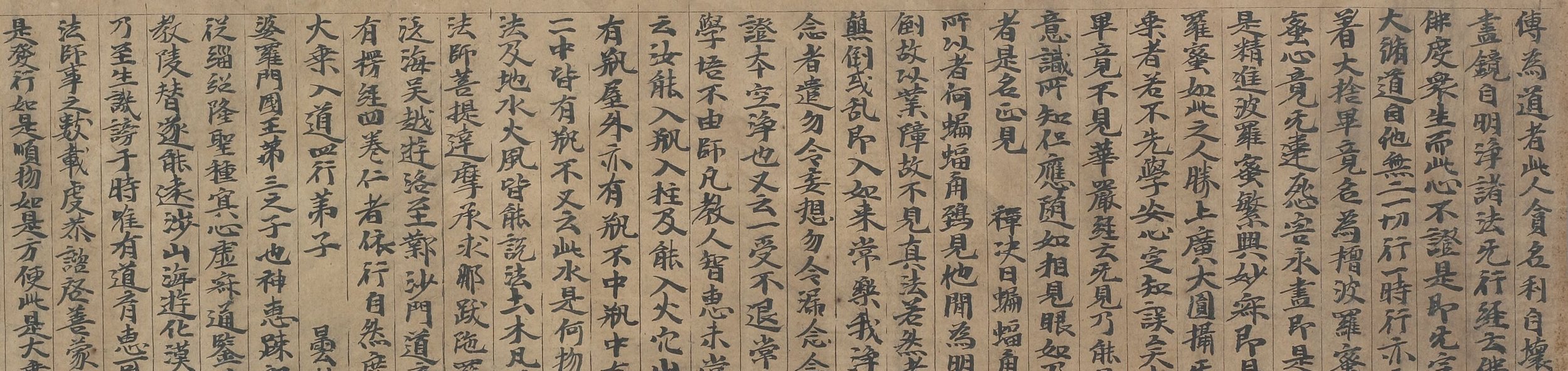
Chan Historiography in Fragments: The Shengzhou ji 聖冑集 and the Dunhuang Manuscript Or.8210/S.4478.
Paper presented at the International Workshop “Buddhist Civilization and Manuscript Culture along the Silk Road 絲綢之路上的佛教文明與寫本文化國際工作坊,” School of History 歷史學院, Zhejiang Univ. 浙江大學, Nov. 15–18, 2024.
Did the Indian Patriarchs Matter? A Diachronic Study of Chan Hagiographies for Ānanda from the Late Tang to the Early Northern Song.
Paper presented at the International Conference “Canonical, Non-Canonical and Extra-Canonical: Interdisciplinary and Multi-media Studies of the Formation, Translation and Transmission of Buddhist Texts 佛教典籍的成立與傳譯視閾下的佛教中國化,” co-organized by The Wutai Shan Institute of Buddhism and Eastern Asian Culture 五臺山東方佛教文化研究院, the FROGBEAR project based at the University of British Columbia, and the Institute for Ethics and Religions Studies 道德與宗教研究院 at Tsinghua University 清華大學. Great Bamboo Grove Monastery 大聖竹林, Mount Wutai 五臺山, August 11–15, 2024.
Revisiting the Textual History of the Zutang ji.
Draft paper based on Chapter 1, Chapter 2, and the Appendix to Chapter 2 in my Ph.D. dissertation.
A Palaeographic Study of the Silla 新羅 Monks’ Hagiographies in the Zutang ji.
(In collaboration with Prof. Feng Guodong 馮國棟) Research on the Editions of the Tiansheng guandeng lu 天聖廣燈錄 (ca. 1029/1036).
Did Daoyuan 道原 (fl. 1004) Rely on the Kaibao Canon 開寶藏 Edition of the Baolin zhuan 寶林傳?
Other Research Projects
Xuefeng Yicun's 雪峰義存 (822–908) Legacy: Chan Circles in the Min 閩 (909–945) and Southern Tang 南唐 (937–976) Kingdoms.
This project builds on my Ph.D. dissertation on the Zutang ji, focusing on the Chan circles in the Min and Southern Tang kingdoms that claimed connection to the influential Chan master Xuefeng Yicun. The project aims to trace the intellectual history of these little studied Chan communities in the Fujian region, examining the social network of these monks, including their connection to local rulers and officials, as well as their literary output and how they are portrayed in the Zutang ji and related texts.
Dunhuang Chan or Chan in Dunhuang? Codicological and Palaeographic Perspectives on Chan Manuscripts in the Stein Collection of the British Library (Temporarily suspended)
This research project investigates the corpus of Chinese Chan/Zen Buddhist manuscripts from the Silk Road oasis of Dunhuang housed in the Stein collection of the British Library. Focusing on codicology, palaeography, and textual transmission, it aims to deepen our understanding of the production contexts of these manuscripts and their role in the intellectual and religious life of Dunhuang during the ninth and tenth centuries. Additionally, through an analysis of variant, rebus, and erroneous characters, this study explores how Chan manuscripts provide crucial insights into scribal and copyist practices in Dunhuang and medieval China. Integrating material analysis, philological research, and digital humanities methodologies, the project will contribute to ongoing efforts in textual encoding of extracanonical sources by producing TEI (Text Encoding Initiative)-compliant critical editions of Chan manuscripts, thereby providing essential tools for future research and translation projects in Chan and Buddhist studies.
The study will be guided by the following key questions:
What do the codicological and palaeographic features of Dunhuang Chan manuscripts reveal about their production and use?
What insights do these Chan manuscripts provide into scribal and copyist practices in Dunhuang and medieval China?
How do textual variants in these manuscripts inform our understanding of the transmission practices and reception of Chan literature in Dunhuang?
Digital Humanities Projects
Short-Term Projects:
TEI-compliant edition of the Dunhuang 敦煌 manuscript Or.8210/S.4478, a fragment of the Shengzhou ji.
TEI edition of the Niutou School 牛頭宗 section of the 1245 Goryeo woodblock edition of the Zutang ji (K.1503).
GIS-based study of the Zutang ji 祖堂集 related to the text’s geographical coverage from the early Tang 唐 (618-907) to the Five Dynasties and Ten Kingdoms 五代十國 (907-960/979) period.
Long-Term Projects:
TEI edition, with parallel translation, of the Dunhuang version of the Liuzu tanjing 六祖壇經 (Platform Sūtra of the Sixth Patriarch), taking Or.8210/S.5475 as the base text.
TEI edition of the extant booklets of the Keitoku dentō shōroku 景德傳燈鈔錄.
Side Projects:
TEI editions of selected manuscripts of the 80-juan 卷 version of the Dafangguang fo huayan jing 大方廣佛華嚴經 preserved in the Stein collection of the British Library (e.g., Or.8210/S.348). Project leader: Wu Luchun 吳廬春 (Zhejiang Provincial Museum 浙江省博物館; J. S. Lee Memorial Fellow at the British Library).
TEI edition of the Dunhuang manuscript Pelliot chinois 3079, a copy of the Weimojie jing jiangjingwen 維摩詰經講經文.